Kenya’s Mobile Money Transfer System
Internet connectivity here in Kenya has been far better than I expected. The hotels have the usual set of problems--I could hardly connect at either one we've stayed at so far due to lack of adequate bandwidth to meet demand. But 3G access and coverage through Safaricom has been surprisingly good.
Why is that? It probably has something to do with the electronic money transfer system here in Kenya, which appears to be more advanced than in other countries in Africa. Such a system requires a widespread, dependable network that gives widespread, dependable access to the internet more generally.
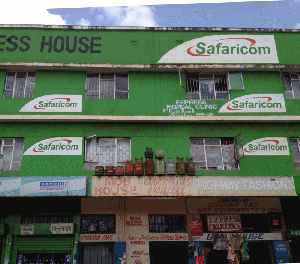
But that brings up another question: Why is electronic money used here more than in other countries?
The answer begins with the fact that in most countries the financial sector is very powerful politically. Put that together with the fact that the development of electronic money eats into the profits of the traditional financial institutions, and it's easy to understand how and why existing financial institutions have used regulatory blocks to hinder the development of the electronic money system in most countries.
If that's the case, why wasn't the financial sector as effective at blocking the development of this type of transactions system in Kenya? The government owns half of Safaricom, and that probably explains why attempts to use regulatory hurdles to impede the development of the system have been relatively ineffective. (There are regulatory restrictions--for example, Safaricom cannot pay interest on the currency balances it holds for people--but they haven't impeded the ability of Safaricom to establish substantial monopoly power.)
As I understand it, Safaricom took large losses as the infrastructure needed to support the system was being built. But now that it is largely in place, Safaricom gets a fee on each and every financial transaction, and it appears to be doing better.
I need to think about this more, but it this seems to be a case where government ownership is actually beneficial in overcoming the hurdles that stand in the way of building such a system (and the government is using devices such as exclusive contracts with dealers to make sure its monoploly power continues). Of course, if government weren't so corrupt, then it would be much harder to erect regulatory barriers and perhaps government ownership wouldn't be needed. But when it is corrupt, giving government a large stake in the outcome seems to make a difference.
More from this Reporter
- Sarah Obama: Barack Was Born in America
- Staying Connected on the Road
- Mark Thoma Reports From Kenya
- The Water Project at Ol Pejeta Conservatory
- Kenya’s Ownership Society
- Evaluating the Millennium Villages
- Mama Sarah Obama
- The Pumwani Maternity Ward
- Kenya’s Kibera Slum
From Other Reporters in This Country
Also appeared in…
- Economist's View