Kenya’s Kibera Slum
Kenya 2012
By Mark Thoma
June 19, 2012
Mark Thoma is traveling to Kenya on a reporting trip with the International Reporting Project. He blogs at Economist's View.
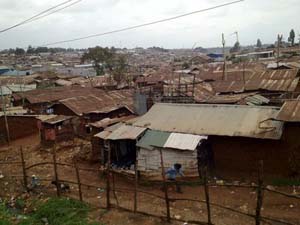
Kibera
Photo: Mark Thoma
The International Reporting Project took us to the Kibera slum today. Everyone here says it's the largest slum in the world (though Wikipedia says it's third), and we heard presentations from youth groups, Doctors Without Borders, and others. We also broke into small groups and interviewed families, about half of whom were HIV positive. We were free to ask anything we wanted.
It's hard to understand how many of them make it at all. Rent for a dirt-walled shack is 1,500 shillings per month; the exchange rate is approximately 80 to 1, so this is around $18.75 per month. All of the people we talked to were casual laborers, and they found work when they could doing things such as knocking on doors and asking if people needed their clothes washed. But the income they bring home, at least as far as I could tell, was hardly enough to pay the rent, let alone buy food.
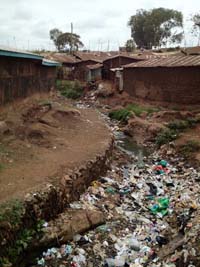
The sewage system
Photo: Mark Thoma
Many ate once per day; one woman said she waited until just before bedtime to feed her kids since they didn't sleep well if they were fed earlier.
As for infrastructure, they get water from the government twice per week (Tuesdays and Sundays)--maybe. At other times, they have to buy it. If they want to use anything but a hole in the ground to go to the bathroom, they must pay 10 shillings. Only 60 toilets are plumbing for 1 million people. The sewage dumps into trenches running along the roads. Even the outhouses, a generous term for what they actually are, were shared by 50 or more families.
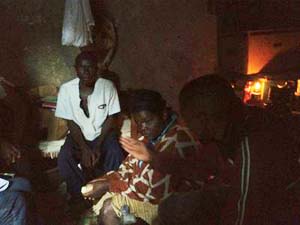
He has AIDS; his wife is virus-free
Photo: Mark Thoma
Nevertheless, the economy was more vibrant than I expected. There is the small economy inside of the slum as they trade with each other, but more importantly there is a huge daily flow of people out of the slums (mostly by foot, and they walk long distances daily) to do work in the industrial and service sectors.
The money from working, when they can, comes back to the slums, but there are all sorts of corrupt institutions that take it right back out--for example, officials that make residents pay exorbitant amounts for water and landlords who charge rent on land that is supposed to be free. When asked, they say the rent is for the structures, not the land, but one of the reporters on the trip made a good point -- how did the landlord get control of the land in the slum so that they could put these shacks on it? What power enforced and allowed them to control land that is supposed to be free? What corruption allows this outside control?
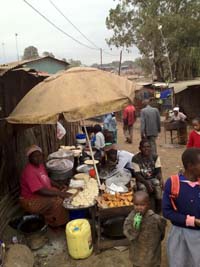
Food stand
Photo: Mark Thoma
Because of this, the money residents of Kibera bring home--and money from other sources, such as aid programs--flows back out of the slum, and guess who loses on the exchange due to the unequal power relationships they face in every transaction?
They seem to understand that schooling is one way out. I asked lots of kids this question in the home visits, and without prompting they all said school was their best hope. One 8-year-old boy wanted to be a pilot. But school is not free; they must pay. So the kids only get spotty lessons here and there, if at all. (There was some confusion here; some said elementary school was free, but most don't go in any case). There are a few schools run by NGOs, but the kids must perform well enough to be accepted and the need far outweighs the opportunity, so the lines are rather strict.
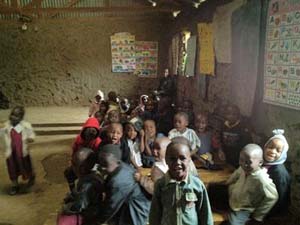
School
Photo: Mark Thoma
Nevertheless, for those who do get in, you could see that they looked healthier and happier, perhaps due in no small part to the fact that they are fed once a day at school. For one child we talked to, and surely more, that was their only meal of the day.
One final observation. At first I thought the key to helping these people would be to create more jobs in the industrial sector -- to bring them regular, dependable incomes from this low-skill employment. But there are also huge infrastructure needs that go unmet. For example, when asked why they only get water from the government twice per week, they answer that there's not enough water to serve all the slums every day, so the government must ration.
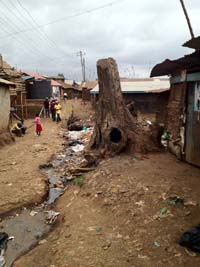
Trees are used for fuel, and are mostly gone.
Photo: Mark Thoma
But from what I understand, there's plenty of water; it's the infrastructure to supply it that is missing. (I was told a lot of water is diverted into flower production.) So jobs and basic social services are a first priority.
But I'm starting to understand how corruption interferes with the development process. There are, for example, many phantom schools -- schools on the books, paid for by government money, that don't actually exist. The same is true for health clinics and for other money intended to help the poor. So its easy to call for more social services, and the government sometimes answers, but how much of it reaches its intended destination? I don't know the exact figure, but it's nowhere near what's allocated from what I heard today.
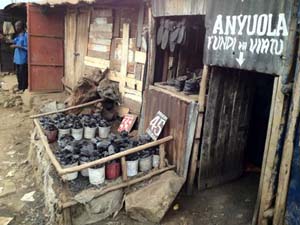
Charcoal is used too -- if you have 35-45 shillings
Photo: Mark Thoma
No politician has ever been jailed for corruption. There was one removed from office over corruption in school construction; they admitted the problem and repaid donors to compensate for what had been stolen, but the president reappointed him the next day so there was no real penalty even in this case.
It's been a long first day, and I haven't really had time to digest all of this -- it was a bit surreal and it never really hit me that I was in a slum in Kenya -- so these are just a few observations from the first day. Hopefully, the picture and the economics, cultural, and social forces driving all of this will clear up a bit over the next nine days. If any development economists would like to weigh in, that would be great.
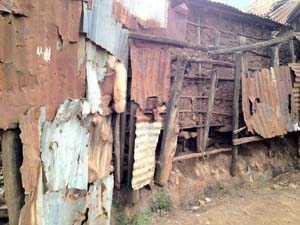
Those solid walls that landlord built. Fleas, bedbugs and other pests hide in the walls.
Photo: Mark Thoma
More from this Reporter
- Sarah Obama: Barack Was Born in America
- Staying Connected on the Road
- Mark Thoma Reports From Kenya
- The Water Project at Ol Pejeta Conservatory
- Kenya’s Mobile Money Transfer System
- Kenya’s Ownership Society
- Evaluating the Millennium Villages
- Mama Sarah Obama
- The Pumwani Maternity Ward
From Other Reporters in This Country
Also appeared in…
- Economist's View