South Africa Diary: A Safe Place for Those Impacted by HIV
Lindiwe was clearly nervous; she had just started talking about it. She’s 22, and it’s taken a year of therapy and a lot of personal work to get her to the point where she can tell her story.
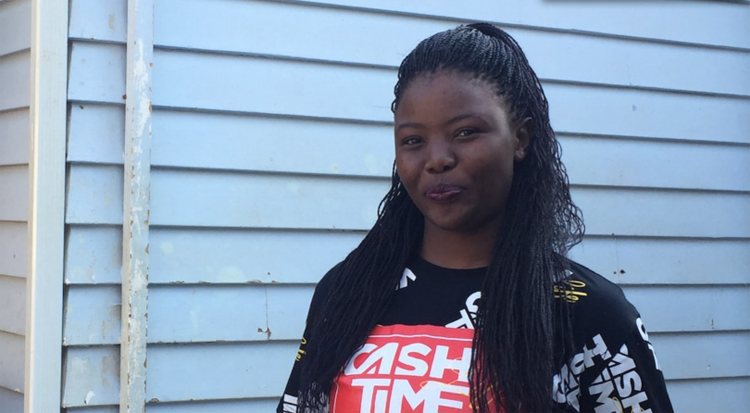
Lindiwe Madoenda, 22, stands in the courtyard at Nkosi's Haven.
Her uncle began molesting her when she was four. Soon, she would have sex with him in the morning, afternoon and before bed.
“I loved him,” she said, looking ashamed.
In truth, it was all a part of her her uncle’s mind games. And little did she know at the time that he had infected her with HIV.
Her mother and father were not around, but her Gran, who loved her dearly, found out what was going on when Lindiwe was six. She was furious, and threatened to go to the police about the rape and abuse.
Lindiwe’s uncle stabbed and killed her grandmother. He was jailed, leaving Lindiwe and her sister with nowhere to go. They lived on the streets of Johannesburg until they were put in the Nazareth House children’s home. Lindiwe’s sister – three years younger than her – was quickly adopted. Over time, workers at the children’s home would try to convince Lindiwe she never had a sister, that she imagined it.
She stayed there for a time, and then another place. Then two years ago, she came to Nkosi’s Haven.
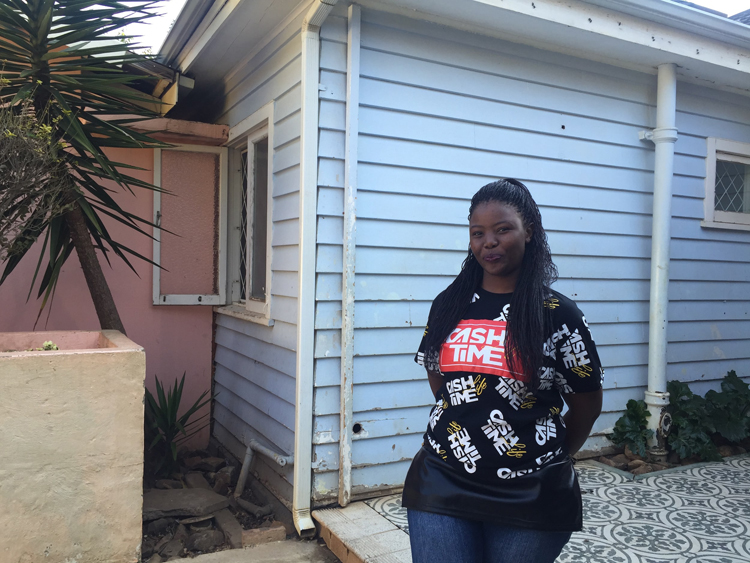
Nkosi’s Haven is a sprawling property on the outskirts of Johannesburg. It was founded in 1999 by Gail Johnson, who named it after a young HIV/AIDS activist, Nkosi Johnson. Nkosi’s mother had died of AIDS; Gail cared for Nkosi until he too passed away. Before his death, Nkosi inspired Gail to launch a home for HIV-infected mothers and children to stay together during treatment.
Gail recalled a conversation she had with Nkosi after his mother died. “Mommy never said goodbye,” he said.
At Nkosi’s Haven, most of the mothers residing there have endured rape. The exact stories may be different, but sexual violence and poverty are constant themes. Currently, 26 mothers, all HIV positive, live there with 95 children. Of those children, 71 are orphans like Lindiwe; 34 of them are HIV positive.
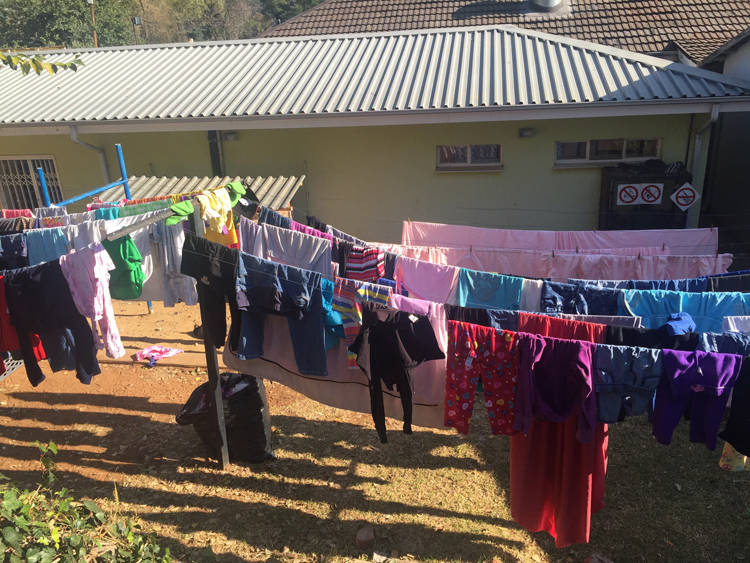
A clothesline outside a set of apartments at Nkosi’s Haven.
Fewer babies are infected with HIV these days because mother-to-child transmissions are down to roughly 2%, so many of the children at Nkosi’s Haven are teenagers born before the transmission rates went down. South Africa accounts for roughly 19% of the global HIV/AIDS epidemic, says Francois Venter, deputy executive director of the Wits Reproductive Health and HIV Institute in Johannesburg.
Physically, Lindiwe is doing well; she takes anti-retroviral medicines once a day, and works at a nonprofit located on the Nkosi’s Haven property. She said she understands the ramifications of her HIV status, but that doesn’t mean she’s having an easy time dealing with it emotionally. “I hide my emotions under happiness,” she explained.
Lindiwe’s smile is wide and bright. As she walks through the property, children stop her for hugs or hellos. One teases her about wearing lipstick today.
She points out the peacocks that amble around the property; they come from a bird sanctuary next door. They all have names, too. Her favorite is Lucky; he has the biggest plumage of them all.
The bright colors of the peacocks match the brightness of Nkosi’s Haven. Buildings are painted pink, yellow and blue, with brightly colored laundry draped over clothes lines. Small murals dot the buildings.
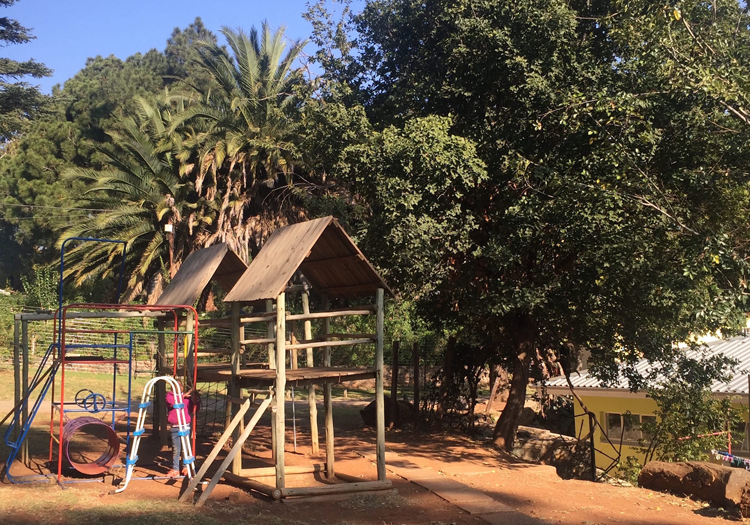
A child plays on a swingset at Nkosi’s Haven in Johannesburg, South Africa.
Lindiwe has told her boyfriend and close friends about her HIV status, and they’re supportive of her. She thinks that younger generations are slightly more accepting of people living with HIV/AIDS, though misinformation remains common. For example, one of her friends worried she would be infected because they shared food. Educating others about the reality of HIV/AIDS is pretty much a matter of daily life for anyone who is HIV positive in South Africa.
“I’m trying to help myself,” she said, referring to therapy and working on her anxiety. The psychological scars her uncle left behind include a lingering fear she might even become like him. “I fear I might molest kids myself,” she worries. It’s an unfounded fear, her therapist and others have told her.
Still, Lindiwe plans for the future. She says she has taken a few college courses, but really wants to go into hotel management. She’s hoping to get training for that soon.
Lindiwe still does not know where her sister is. Her therapist and others are helping with her search. She’s hoping she’ll succeed, given the little family she has left.
She doesn’t know if her younger sister was abused. She has so many questions.
Reported.ly’s Kim Bui is currently in South Africa on a journalism fellowship from the International Reporting Project (IRP). This is the first story in a series of stories we’re calling South Africa Diary.
More from this Reporter
- South Africa Diary: Pride and Poverty in Khayelitsha Township
- The Flavors of Safe Sex in South Africa
From Other Reporters in This Country
Also appeared in…
- Reported.ly