Nepal Connections: Yaks Happily Share the Trail With Trekkers
You stare into the void, and the void stares back. And so does a yak.
My daughter, Anna, has been a fountain of yak-related humor ever since we cleared 12,000-feet altitude and started running into these remarkable animals.
They resemble a cross between an American bison and a golden retriever, with the latter providing the disposition and the hairstyle. Except yaks sport tresses that would make horse groomers swoon.
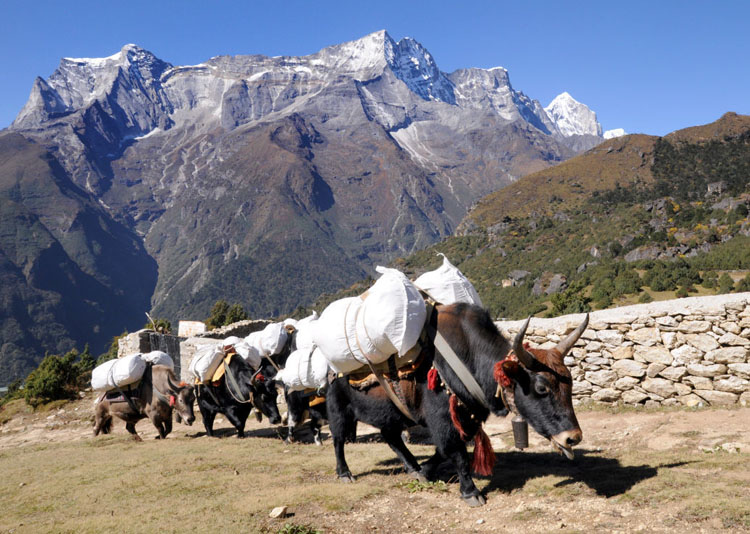
Trekkers in Sagarmatha National Park share the trail with gentle, 400-pound yaks enlisted as beasts of burden.
Phortse hovers on a Himalayan hillside about 12,500 feet above sea level, and appears to have five yaks for every person. They wander at will past bedroom windows, across fields and into campsites, with no one seeming concerned that a lot of 400-pound, long-horned, long-haired bovines are loose.
That's important when you're sharing a 4-foot-wide trail with a train of yaks loaded with mounds of propane canisters, flour and rice sacks, and other commercial goods, and you're about 2,000 feet above the helicopters flying below the fog bank you're walking in.
The yak doesn't mind, nor does it spook. It ambles past like another trekker, only with 18-inch horns and enormous eyelashes.
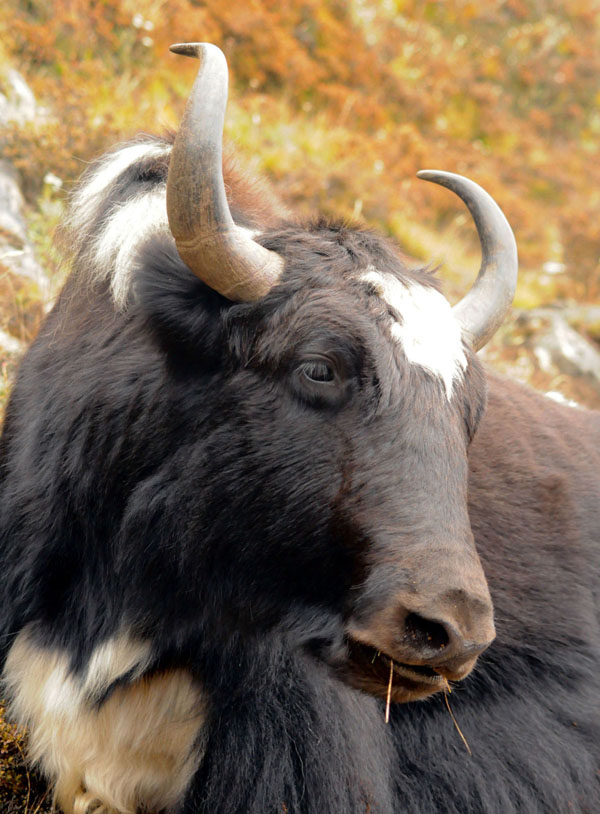
Even the eyelashes are long on Nepali yaks.
The incomparable peak of Ama Dablam soars somewhere above, but in the fog. We might as well be walking up a particularly steep portion of Yaak, Montana.
Except that yaks are everywhere, bellowing, squeaking, honking, growling, whimpering and snorting. They have far more vocalizations than your average cow, and appear to never lose their sense of goofy calf-ness.
When not loaded, they scramble across the hillsides like mountain goats, fling themselves in dust wallows, and wander up to strangers like inquisitive puppies.
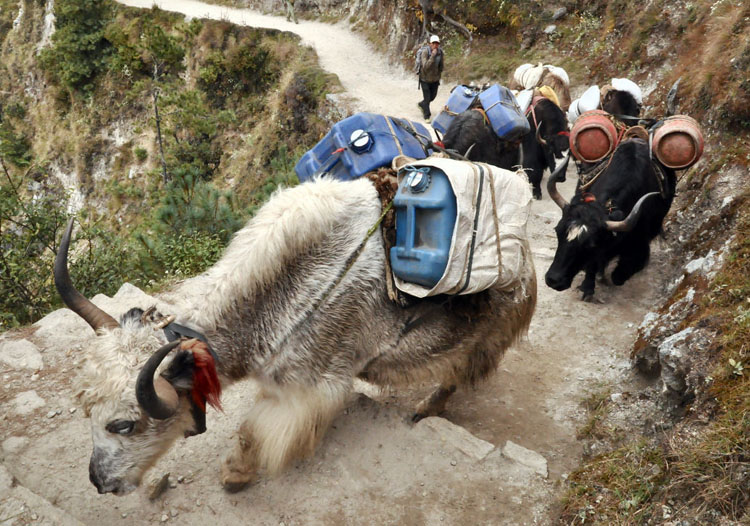
Trekkers need not worry about sharing the narrow trail with enormous yaks. These beasts of burden do not spook.
While they bear ear tags in case someone has an ownership dispute, our guide Angdawa Sherpa tells us each herd of yaks knows its herder. He calls them with a collection of whistles and yells, and the particular dozen belonging to him rally up.
Angdawa added it's not a good idea to talk to a yak herder.
That's because his yaks will come and surround him in defensive posture, much like arctic musk ox will circle their calves to protect against wolves.
Vendors sell yak cheese in an open-air bazaar.
***
It is good to have an occasional foggy day in a scenic wonderland like Sagarmatha National Park.
Were we mesmerized by the mountains, we might never have seen the little herd of Himalayan tahrs – big as the mountain goats of Glacier National Park, but blackish-brown instead of white.
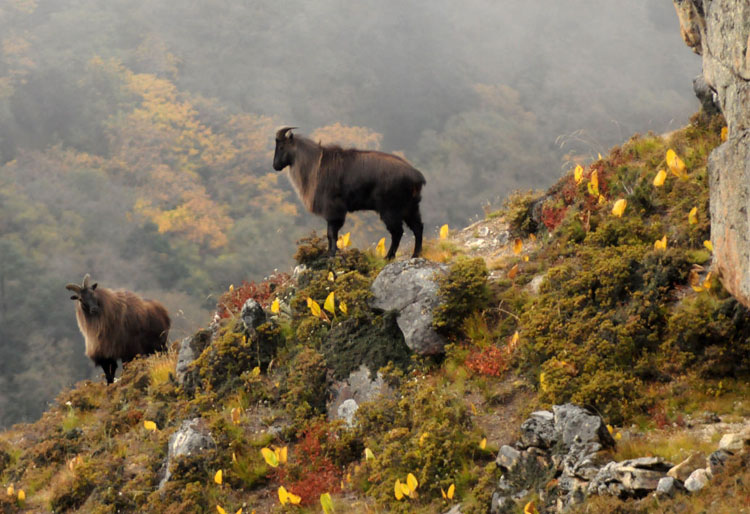
Himalayan tahrs are as big as the mountain goats of Glacier National Park, but blackish brown instead of white.
Nor would we have spotted the Impsempsend, Nepal's national bird, with a head fob like a peacock and a sapphire-blue back.
Yaktually, it's hard to have a bad day here. Yakkity yak.
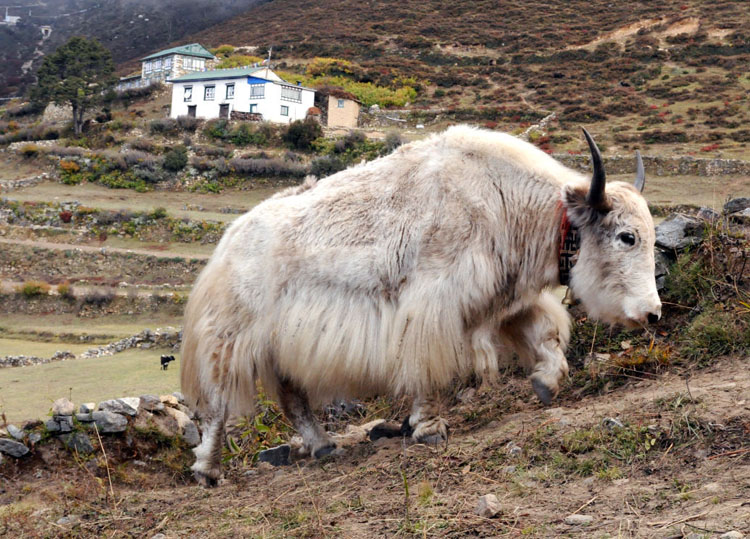
Yaks never lose their playfulness, cavorting across hillsides and through yards.
Missoulian reporter Rob Chaney is in Nepal this month, studying the connections between that country and western Montana, in cooperation with the International Reporting Project.
More from this Reporter
- Nepali Tiger Poachers Fear University of Montana Mapmakers
- On the Roof of the World: Time Takes a Different Path in Nepal
- Himalayan Guides Pack Nepal’s Economy to New Heights
- Knitted Together: Montana-Nepal Partnership Builds Jobs and Security
- Nepal Connections: Wild Bicycle Commute Carries Montanans Out of Kathmandu, Around Fuel Crisis
- Nepal Connections: Walking the Traditional, and Only, Way to Explore Sagarmatha National Park
- Nepal Connections: Trail to Everest Under Repair, Open for Business
- Nepal Connections: In Kathmandu, Cross-Border Dispute Calms Traffic
- Nepal Connections: Asan Bazaar a Testament to Earthquake’s Upheaval, Nepali Culture
- Abbot of Ewam Garden in Arlee Says Tibetan, Native American Beliefs Similar
- Peaks and People: Montana and Nepal Linked by Buddhists, Sherpas and Scholars
From Other Reporters in This Country
Also appeared in…
- Missoulian