Problems Plague Tsunami Recovery
Villagers wonder why relief is so hard to come by after disaster
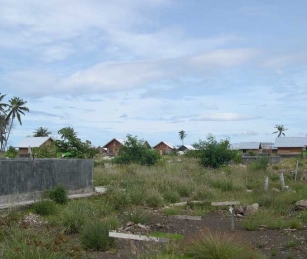
A year after the devastating tsunami hit Indonesia, many coastal areas are still in ruins.
LAPANG, Indonesia -- Right after the earthquake last December, villagers here ran to the beach to gather all the fish that had been left behind when the water receded. Then the ocean rushed back in a monster tsunami.
A day later, villagers began sorting through the bodies, trying to identify family members and friends.
They talk of ghosts on the beach now.
Farther inland, near the tents and temporary barracks in which most of the villagers live, they can't grow rice where they once did. Lukman Bin Muhammad Yusuf has lived here his whole life and said the water isn't clean enough to cultivate the village staple.
"The water brought garbage to this place," he said. "The water is still dirty from the tsunami."
The tsunami killed at least 216,000 people in Indonesia, Sri Lanka, Thailand, India, the Maldives and Somalia. It left countless more homeless.
One year after more than 130,000 Indonesians were killed and half a million were left homeless, people in Aceh are still struggling to pull their lives back together. Foreign relief groups are trying to help them, but often the aid filters in at a trickle.
The reasons are many: The sheer scope of destruction, fear that money intended for relief work will line the pockets of notoriously corrupt government officials, and difficulty in properly coordinating the efforts of hundreds of relief organizations top the list. Add to that disorganized village governments and leaders inexperienced with navigating the bureaucracy of humanitarian organizations, and the problem just gets worse.
Fuad Mardhatillah works as a deputy for the area's Reconstruction and Rehabilitation Agency, which oversees all the rebuilding efforts from local governments and international humanitarian groups.
He conceded that work is moving much more slowly than anyone would like.
"We face problems with regulations," he said. "When we want to reconstruct, we give our word to the local government, but we have to follow all the rules of government in a normal situation. This is an abnormal situation. This is why it's very slow."
Changes that would streamline current regulations are still pending, he added.
But not all victims of the tsunami are waiting idly for such reforms.
Two months ago, dozens of women from Lapang rented cars and buses and took their concerns to the district government complex in nearby Lhokseumawe.
They wanted to know why an ambulance did not come when a man fell ill from living in a filthy barrack.
They wanted to know why they were given trash receptacles when no one comes to pick up their garbage. They wanted to know why their cash allotments for food had been cut.
Nurbasiah, who like many Indonesians uses one name, said that, for her and others like her, these are issues of life and death.
The man who couldn't get the ambulance, he died, she said.
"I have the same disease as the man who died," she said.
She doesn't know the ailment's name but said it begins with a three-day fever and a red rash that covers the skin. "You feel tired, and then you don't want to do anything."
She knows money flooded into the region after the tsunami but wonders where it's all going. Many people in this village assume it's being stolen, and they have good reason.
In a survey conducted by the Berlin-based anti-corruption group Transparency International, Indonesia ranked near the bottom at 137 out of 159 countries that were examined for corrupt government and business practices.
"We think someone is stealing the money - the government and maybe some of the aid groups," she said.
Humanitarian groups have confirmed such rumors, and some workers say if they didn't pay kickbacks, there would be no way to get any of their work accomplished.
None of those workers would discuss corruption on the record, though.
Even when they factor in corruption, the villagers in Lapang figure the money should be plenty enough to go around.
Illius Hassan, the village chief, said that, until October, the village elders had never met to discuss how to go about getting funding.
"We don't know how to ask for the money," he said. But it isn't just approaching relief groups that villagers here find difficult.
It's also knowing how to deal with them when they visit the village.
Hassan said they make plenty of promises but don't deliver.
"They just asked how many victims were in this village," he said of one group. "They never came back."
Hassan did not remember the group's name.
More from this Reporter
- Proselytizing Creates Friction in Indonesia
- Banda Aceh Invites Christians’ Aid, But Not Their Proselytizing
- Giving Peace a Chance in Banda Aceh, Indonesia
- Christians Defy Law to Convert Muslims in Tsunami Aftermath