
|
|
|
|
|
|
|
|
|
|
|
|
|
|
Photo Essay: Eritrea (continued)
Eighty-year-old Demet Negru has seen enough war. She doesn't want to see any more. Family photos and pictures of Mary and Jesus crowd the green walls in her tiny bedroom. Tucked among these images is a certificate with a photo of her daughter, Tsega, declaring her martyrdom in the war for liberation.
This is a familiar sight. In every Eritrean home I've entered, I've found at least one, sometimes more, of these reminders of the human cost of conflict.
|
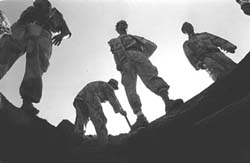
"I really don't know much about politics,'' says Demet, who has lived under British, Italian, Ethiopian and Eritrean rule. In the Trenches: Ertirean soldiers building a bunker during a lull in the fighting |
|
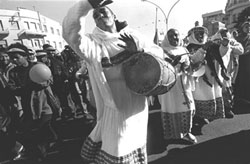
During the war for independence, Demet led her church's prayer group once a month, praying for peace along with groups from the other Catholic churches in Asmara. Eritreans marching for peace |
|
Then came the blessed but brief spell of peace. Eritrea was on the road to prosperity. The economy grew at 5 percent a year. The government built new schools, clinics and roads.
Now the money and the labor formerly used to rebuild a war-torn nation is funding another war, and Demet is once again praying for peace, attending special services at 4 a.m. and 4 p.m. each day.
"I don't know what's going to happen in the future," she says. "But I have faith in God. And I believe Eritrea will attain the complete peace, harmony and prosperity that we prayed for so hard for such a long time."
|
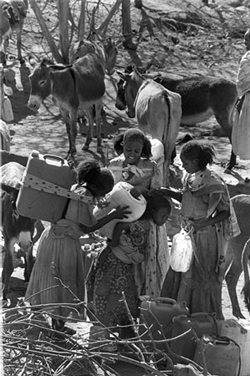
"During the war for independence, women constituted one-third of Eritrea's army. They were not merely logistical support. Women held command positions, led tanks into battle. They served in combat, side by side with the men. They were wounded, died and gave birth in the field. They had liberated their homeland from an oppressive Ethiopian regime. In some ways, they were able to use the equal status garnered on the battlefield to liberate themselves from the repressive traditions of the predominantly patriarchal society. Prior to independence, family members arranged their daughters' marriages, frequently when the girls were in adolescence. Proverbs and folk songs demeaned women, comparing them with donkeys. Women were forbidden to own property. Young Eritrean girls gathering water |
« previous more »
Copyright © 2005 International Reporting Project. All Rights Reserved.