

|
|
|
|
|
|
|
|
|
|
|
|
|
|
Photo Essay: The Aral Sea's Isle of Despair (Continued)
|
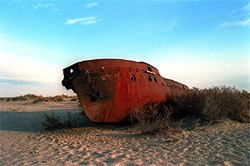
The Aral Sea has dried up, leaving behind sand and a few rusting Soviet-era fishing boats. This boat was about a half-mile out from the former shoreline. Many people now use the seabed as a place to graze their cattle. Where once there were fish, now there are cows. |
|
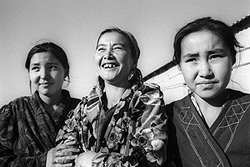
A Karakalpak woman and her daughters. While traveling around Karakalpakstan, my guide and I stayed with his relatives. I was the honored guest, and my hosts were unfailingly generous. Every meal was a feast: Everywhere I stayed, I ate freshly slaughtered goats, chickens and turkeys. Knowing that these people did not have very much money, I often tried to dissuade them from treating me so well. They always insisted. |
|
|
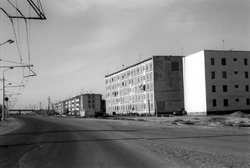
The demise of the Sea has hurt the entire region. Once a bustling city, Nukus, the capital of Karakalpakstan, is now a bleak place: block after block of crumbling apartment complexes and empty parks filled with stunted trees, which cannot grow in the salty soil. To save money, the electricity is shut off every day for several hours. One must take special care when driving during these periods, because the traffic signals don't work. Many families survive by setting up small tables in front of their houses and selling sunflower seeds, candy and soda. One sees these stands everywhere: bundled-up women sitting silently, even on bitterly cold winter nights, waiting to make a few sums. |
« previous more »
Copyright © 2005 International Reporting Project. All Rights Reserved.