
|
|
|
|
|
|
|
|
|
|
|
|
|
|
Photo Essay: Eritrea
Circle of Rebirth
|
more on Cheryl Hatch
|
ASMARA, Eritrea January 13, 2000 -- Africa's newest nation is small, shaped like a lamb chop, bordered by the Red Sea on the east, Sudan on the west and Ethiopia to the south. For 30 years and with little international support, Eritrea, with a population of 3.5 million, waged a war for independence from Ethiopia, with a population of 60 million and the military support of the Soviet Union.
|
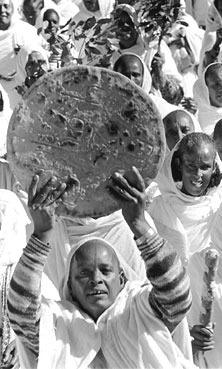
Rocky highlands and desert lowlands make up this arid nation, which gained independence in 1991. Following independence, Eritrea began an intense campaign to demobilize its fighters and rebuild the country's infrastructure. By 1995, the economy was growing by 5 percent to 6 percent per year. The government then asked more than a dozen relief organizations to leave. "We simply believe that we should not be dependent forever. At the end of the day, we have to live by our own means," said Yemane Gebremeskel, Eritrea's presidential spokesperson. An Eritrean woman at a peace march in Asmara holds a "himbasha," a loaf of bread symbolizing prosperity. |
|
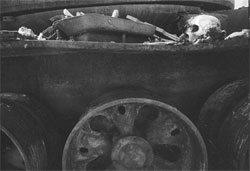
In May 1998, however, war erupted again with Ethiopia. More than 150,000 people have been internally displaced from the border areas and now live in refugee camps. There are 250,000 to 268,000 war-displaced persons. An additional 60,000 Eritreans have been deported from Ethiopia. |
|
|
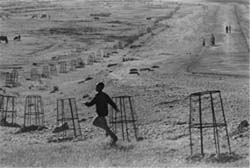
Despite all of this, the Eritreans still pursue prosperity in the face of disaster. High school students from the urban centers take two weeks off school and harvest the sorghum crop in the western lowlands. |
Copyright © 2005 International Reporting Project. All Rights Reserved.