

|
|
|
|
|
|
|
|
|
|
|
|
|
|

Global Warming May Hit Developing Nations Hard, says Climate Change Scientist
 |
|
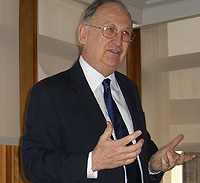
| Michael MacCracken |
WASHINGTON, January 22, 2007 � Developing nations contribute only a small fraction of the world’s carbon dioxide emissions, but they stand to suffer greatly from climate change, said Michael MacCracken, Chief Scientist for Climate Change Programs at the Climate Institute, at an IRP seminar for the spring 2007 IRP Fellows and SAIS students. Of all the effects of climate change, shifting water resources could have the most profound impact on developing countries. Increased evaporation rates from global warming will make dry areas more arid and precipitation elsewhere more intense. Global warming could also bring more violent storms, destroy existing ecosystems, and increase infectious diseases, while shifting climate zones could disrupt global commodity markets.
From 1993-2002, MacCracken served as executive director and senior global change scientist with the interagency Office of the U.S. Global Change Research Program (USGCRP). He participates in numerous international scientific expert groups that measure and try to address the impact of climate change.
MacCracken is one of several thousand scientists participating worldwide in The Intergovernmental Panel on Climate Change (IPCC), overseen by the United Nations, which is releasing a series of advisory reports proposing solutions to global warming. The first IPCC report will be made public on February 2nd. MacCracken said that every region has a role to play. “Developed nations have a bigger hump to get over” in dismantling a fossil-fuel based infrastructure, he said, but developing nations have to commit to green development.
In many ways, said MacCracken, “climate change is only one aspect of a bigger problem.” As birth rates soar in the developing world, how do we manage the world’s resources to sustain an expanding population? “Climate change is really a way to get people to talk about all the issues relating human beings to the natural world.”
Copyright © 2007 International Reporting Project. All Rights Reserved.