

|
|
|
|
|
|
|
|
|
|
|
|
|
|

Afghanistan and Central Asia in Dire Need of Economic Aid, Expert Says
 |
|
|
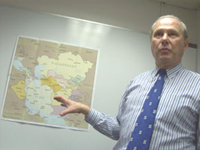
Central Asia states may prove models of secular society, says S. Frederick Starr. |
|
|
Click here for audio excerpt |
Washington, January 23, 2002 - War-ravaged Afghanistan and its Central Asian neighbors need an infusion of massive economic assistance and agricultural development to help ensure political stability in the wake of the Taliban defeat by U.S.-led forces, an expert on the region told IRP Fellows today.
A key to the region's success will be the ability of Afghan farmers "to plant this spring," said S. Frederick Starr, chairman of the Central Asia Institute at The Johns Hopkins University's School of Advanced International Studies. Farmers will need assistance in clearing landmines from the conflict that ousted the Taliban from political leadership of Afghanistan following the terrorist attacks on the United States September 11.
Starr said the countries that make up the core of the region - Afghanistan, Uzbekistan, Tajikistan, Kazakhstan, Turkmenistan and Kyrgyzstan - face tremendous risks of political instability because they are surrounded by several nuclear powers who have been political rivals for centuries.
But at the same time, Starr said, the region has a "potentially tremendous upside" in that its people have traditionally traded with each other along routes that have spanned thousands of miles and have lived relatively free of ethnic conflicts. With majority Muslim populations, the countries are "secular states," he said. "If they succeed�.if they are viable, you have a model, an updated version of the Turkish model, of a secular state, a Muslim society, one that is open to the modern world," which Starr said was a "healthier model then the one being promoted from the Arab world."
Copyright © 2005 International Reporting Project. All Rights Reserved.