Perry Beeman's Blogs
-
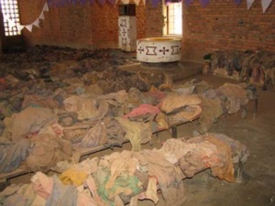
A look back at my visit to Rwanda, 18 years after the genocide
Today marks the 18th anniversary of the genocide in Rwanda, which claimed the lives of as many as 1 million Tutsis and moderate Hutus. In 2009, I spent weeks in Rwanda on a fellowship with the International Reporting Project. I was there in large part to examine the country’s surprisingly environmental efforts, but I took time to visit genocide memorials and to try to understand the depth of what happened. To mark this anniversary, I’d like to share a blog post I wrote in 2009 after visiting one of the church’s where Tutsis went for safety, only to be slaughtered by Hutus determined to kill all Tutsis.
-
Power up, Rwanda, Part 2
Here’s another couple of tidbits about Rwanda’s bid to get electricity to its nearly 10 million people. So far, 130,000 homes and business are hooked up to the grid. The goal is add 250,000 more in the short term. By 2012, 16 percent of population should be in dwellings connected to the grid. That does not mean the people can afford the power, which is highly expensive. The government is looking to subsidize the industry. And we’re talking about power for energy efficient light bulbs in most cases, not electric appliances, flat screen TVs and refrigerators. When you order a beverage in Rwanda, they ask if you want it warm or cold. Apparently many over there are so used to warm sodas and beer they prefer it that way. Often, in the villages, you don’t get a choice. It’s warm, or nothing. The country has...
-
Rwanda update
I have returned to Washington, D.C., where I am on a fellowship through the International Reporting Project, the kind organization that paid for my travels to Rwanda. I’m back in my temporary office at Johns Hopkins’ School of Advanced International Studies, a few blocks from the hubbub and fantastic food of Dupont Circle. Thanks to the equally kind people at the Woodrow Wilson International Center for Scholars, I’ll be staying in D.C. a few more weeks than originally planned. The Wilson Center offered me a short-term appointment as a public policy scholar. I’ll be continuing my studies of Rwanda’s environmental efforts, and my writing on that topic. I’ll also look into other international environmental topics, particularly energy, climate and resource management, as time permits. Oh, yes, and I’ll be sorting through thousands of photographs, some of which...
-
Turn on Rwanda
Rwanda has a serious electricity shortage. The government acknowledges that the lack of power, good roads and safe water supplies hold back development here. In 2007, 4.5 percent of the population had electricity, most of it from hydroelectric plants. The government wants to raise that to 30 or 35 percent by 2020, largely with hydro expansions and by burning methane from dumps and from an unusual, giant bubble sitting under Lake Kivu in the country’s volcano region. Ben Beck of Des Moines, Ia., is doing his part. Beck is conservation director at Great Ape Trust of Iowa, which is doing chimpanzee research and conservation work in the Gishwati Forest area of northern Rwanda. The project is in cooperation with Rwanda’s federal and local governments. I’ve had a first-hand look over the past month. In a meeting with local officials recently, Beck mentioned that he is trying to...
-
\“Clean\” Rwanda, Part 3
I wrote earlier about how clean the streets are in Rwanda. In general, the country is surprisingly clean, especially by African standards. But I’ve learned there are plenty of serious environmental challenges here. The air is full of smoke and soot, open dumping is a problem in places and the waterways run the color of creamed coffee. Here’s more. Rwanda has next to no sewage systems. That includes Kigali, a city of approximately 1 million with no central system. Imagine if San Diego, Detroit or Dallas, which are roughly the same size, had only septic systems and pit toilets. The government says Kigali probably never will have a central sewage system because of its hilly terrain. In Kigali and in much of Rwanda, people merely dig pit toilets — channeling wastes in crude trenches to some low spot. Some have simple septic systems. Sludge is...
-
State of Rwanda’s environment
Trust me, you’ll find some of what is in this handy volume fascinating. I’ll do the heavy lifting. In the days and weeks ahead, I’ll share some of the most compelling facts from this first-ever environmental report card for the east African country. I’m here seeing for myself, as part of an International Reporting Project fellowship.
-
“Clean” Rwanda, Part 2
Earlier in my five-week trip to Rwanda, I blogged about the surprising cleanliness of this east African country. No illegal dumping in sight. Clean streets in the cities, with women sweeping the curbs with brooms. Litter rare. A mandatory fourth-Saturday monthly cleanup sends all adults, including President Paul Kagame, out to spruce things up for four hours. There are some things that aren’t clean here: The air and the waterways. First, the air. As I write this, I am in Kigali, the capital city. This is the third or fourth time I’ve returned to Kigali after traveling the rural areas. There is a thick haze over the city, and, for the first time, I’ve having trouble breathing. (Well, OK, a couple of mountain hikes did a nice job of taking my breath away, too, in more ways than one.) My eyes and...
-
Coke is it, in French and Arabic
I’ve always thought it was amazing how well Coke is distributed. It’s amusing to see the cans and bottles printed in so many languages. The Rwanda guide books mentioned that Coke and Pepsi products are widely available here. I saw a Pepsi cooler once, and contained food, not Pepsi. But Coke is everywhere. The small bottles are labeled in French (other than the name Coca-Cola). The cans most often are printed in Arabic.
-
Joy in Rwanda, Part 2
Earlier in my trip to Rwanda as a fellow with the International Reporting Project, an acquaintance, Sylvain, invited me to attend his Pentacostal Church. I gladly accepted. The walk through Gisenyi gave us a good flavor of the community. But the service was most moving of all. I was invited to sit up front with the ministers and to address the audience, through a translator. Four choirs performed in the three hour service. What struck me most was the absolute joy in the faces of these worshipers. These people live one of the poorest and most crowded countries on the planet. They are moving on with their lives after watching friends, neighbors and relatives kill up to 1 million of their closest kin and friends in one of the world’s worst genocides, 15 years ago. Yet on this day, it seemed like the whole congregation rose...
-
French influences in Rwanda
The official line is that Rwanda will be pushing English as the go-to second language, replacing French, to position the country better in international business circles. As it is, Kinyarwanda is the prevailing language, and French is spoken almost everywhere, too. People here hold a lot of disdain for the French for that country’s role in setting up the tensions that led to the 1994 genocide, when nearly 1 million Tutsis and moderate Hutus were beaten, shot or hacked to death. Yet French influences are everywhere here. Many businesses have names that employ French. I tried to use the computer in the hotel lobby today and discovered the browser was in French and the keyboard, which contained French symbols, did not have the same alignment of letters as U.S. computers do. Tellingly, when Rwandans see a Muzungu, or white person, they almost instinctively begin speaking...
Your donation helps continue the IRP's work to inform the public about international issues.
Make A Gift