China’s Rapid Growth Increases Social Tensions
|
|
| Minxin Pei |
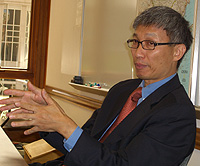
WASHINGTON, September 12, 2006 � The consensus for economic growth in China is breaking down and could have grave consequences for China’s social stability, said Minxin Pei, the director of the China Program at the Carnegie Endowment for International Peace in Washington D.C. He spoke Tuesday afternoon during an International Reporting Project talk attended by members of the SAIS community.
Pei said the societal coalition that supported Deng Xiaoping in opening up China’s economy nearly 30 years ago has fragmented. The peasants and workers have become jaded as the economic inequities between urban and rural regions widen, Pei said, and basic health care and education grow increasingly out of reach for ordinary Chinese. “This single-minded focus on economic growth has resulted in huge imbalances in Chinese society,” he said.
Moreover, Pei said China’s current political leaders seem to lack any “overriding vision” for where they want to take the country.
“Their thinking tends to be driven by day-to-day concerns,” Pei said, adding that “you have a leadership which is more or less ideologically lost, aimless, adrift.”
Pei joked that the Chinese Communist Party is more republican than the Republicans in Washington, citing a loathing for taxes among the Chinese leadership, the privatization of health care there, and an increasing share of education costs being shouldered by poor families. He said the average family in China spends one-third of its disposable income on education.
China needs better accountability and incentives built into its political structure, Pei said, so that those who harm the public good will be punished, and those who work on its behalf will be rewarded. But instead of trying to reform the political system and move forward, Chinese leaders too often are looking backward, sometimes harkening back to the values of the Chinese philosopher Confucius, values that Pei called “old fashioned.”
“This is so, shall we say, so 2nd century BC,” Pei said.
Copyright © 2005 International Reporting Project. All Rights Reserved.